Transforming Human Resources: The 2027 Hiring & Salary Landscape
Excerpt from Addison Group’s 2027 WORKFORCE PLANNING & SALARY GUIDE
Key Takeaways
- AI is reshaping HR roles, leading to a significant demand for professionals skilled in AI implementation and strategy.
- AI fluency becomes crucial, with employers seeking HR candidates who understand AI tools and their workplace impacts.
- New strategic HR roles are emerging, such as Chief People and AI Transformation Officer, driven by the need for organizational change management.
- Skills-based hiring is on the rise, emphasizing practical experience over traditional qualifications.
- Speed and flexibility in hiring processes are essential; top candidates may only remain available for about 10 days.
Transforming Human Resources: The 2027 Hiring & Salary Landscape
HR Roles Shifting as AI Transforms the Workplace
A massive AI-driven reinvention is changing how employers navigate a competitive talent market and evolving workplace expectations. Today, HR professionals must juggle a complex mix of workforce shifts, new technologies, and changing laws.
As companies work to attract and retain talent, they are more committed than ever to investing in their own human resources teams. The outlook is bright for HR professionals as the industry forecasts a solid 7% growth over the next decade.1 Benefits managers, People/HR Analysts, and talent acquisition managers continue to be in strong demand as well as new workforce AI strategy roles.
Agentic AI is being leveraged in HR to autonomously execute workflows, analyze data, and enhance employee experiences, therefore streamlining HR operations, reducing administrative burdens, and improving decision-making. Although AI may impact some traditional HR roles, many new roles will also be created. Furthermore, the strategic proportion of HR work is expected to grow from 30% to 75%, essentially making HR work more important than ever.2
AI Fluency Becomes Core Competency
AI fluency is accelerating fast and those who can master it will position themselves as top job candidates. A year ago, many HR professionals had little to no practical experience using AI. Fast forward to 2026 and employers are expecting candidates with an advanced understanding of the tools who can help to efficiently implement them. Early adopters are bringing AI skills into new roles, but for most, it is still evolving. A recent study noted that although 82% of HR professionals are using AI, only 30% have received comprehensive, job-specific AI training.3
To help close that gap, learning and development, including instructional design, has become one of HR’s most critical functions, tasked with building the AI and digital fluency employees need to keep pace.
This transformation is also shifting many HR functions toward formal AI governance. Organizations are increasingly forming cross-functional oversight groups to set guardrails around fairness, transparency, and bias prevention as HR leans more heavily on algorithms to source, screen, and evaluate talent.
Demand Rising for AI-Oriented Strategic HR Roles
As the pace of transformation escalates, so does the need for professionals who can lead organizational change and manage technology implementation, workforce planning, and employment models. HR leaders will help organizations prepare their people for transformation or develop a strategy to implement it with new titles such as Director of Workforce Architecture, Chief People, and AI Transformation Officer.4
People and technology strategies have to work hand-in-hand with organizational development and AI implementation skills. These are becoming essential requirements for HR roles at every level and require a combination of technical understanding and strong interpersonal skills. HR leaders must be able to evaluate new AI tools while also understanding how those tools will affect employees and company culture.
It’s predicted that by 2027, half of companies without a genuine, people-centric AI strategy will lose their top AI talent to competitors who invest in workforce enablement.5
While wage increases remain around 3.5% for many roles, HR professionals with demonstrated AI integration, leadership, and change management skills can expect premium salary and benefits packages.6
Related content
- Upskilling and Internal Mobility: Your Secret Weapons Against Talent Shortages
- Contract or Permanent Talent: Which to Hire Before Year-End
- Skills-Based Hiring: How to Find Qualified Talent When Resumes Look the Same
“One of the big changes with AI is the shift from a preferred skill to a must-have. Many organizations have invested in technology and expect HR pros to use it.” – Matt Polos, Senior Vice President, HR & Administrative, Addison Group.
Skills Over Credentials
Ask any HR manager what has changed the most over the past year and skills-based hiring is at the top of the list. Now, a candidate’s competencies outweigh traditional qualifications such as degrees or certifications – a real benefit to employers as it matches proven capabilities directly to job requirements. Today, 34% of organizations often or almost always use skills-first hiring strategies, while another 55% of organizations that rarely or never use them are interested in adopting them.7
For job-hunting HR professionals, this reinforces the importance of demonstrating practical experience during interviews. Candidates who can share examples of how they have implemented technologies such as AI-powered recruitment platforms, Cloud HR systems, or sentiment analysis tools will likely have the advantage in interviews as they showcase real-world skills and problem-solving ability.
Employers need to consider that top candidates may not arrive with all the AI skills they want and be open to hiring for aptitude and desire to learn over becoming fixated on a skills checklist.
Move Fast, Stay Flexible
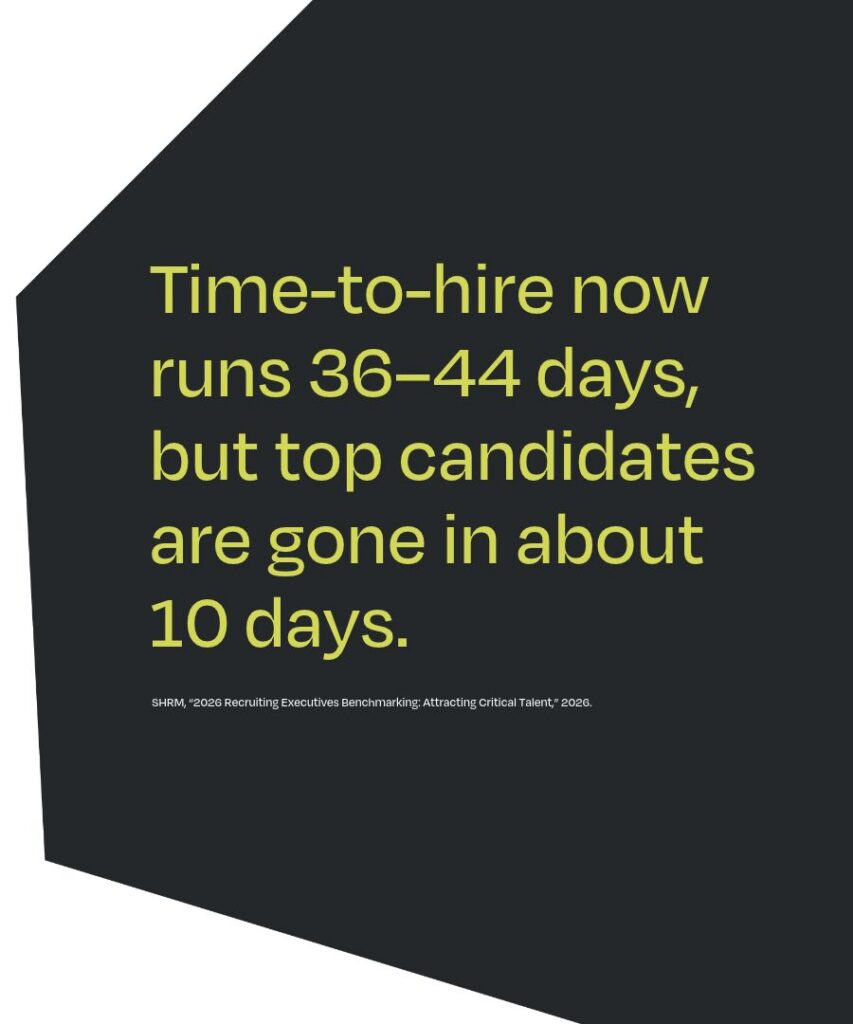
Time-to-hire now runs 36–44 days, but top candidates are gone in about 10 days,8 a gap that punishes slow employers. Companies need to map out the interview process up front, combine stakeholders into a single round rather than five sequential ones, and build a repeatable process rather than reinventing it each time. And once a candidate is in the room, employers need to sell the organization as hard as candidates sell themselves.
Flexibility has followed the same trajectory as speed: no longer a perk, but a deciding factor. Addison Group has found that jobs that emphasize flexible arrangements attract more applicants. Beyond hybrid schedules, remote stints, and accommodating schedules for employees who are parents or caregivers, can tip the scales on which candidates stay in the process and which ones move on.
Top Human Resources Salaries
| CHRO | $267,620 |
| VP of HR | $236,205 |
| Total Rewards Director | $203,929 |
| HR Director | $200,624 |
| Talent Acquisition Director | $200,624 |
| Head of HR | $197,019 |
| Recruitment Director | $190,016 |
| HRIS Manager | $175,021 |
| Compensation & Benefits Manager | $173,826 |
| Compensation Manager | $157,764 |
Contact us today to optimize your workforce strategy and secure the skilled talent your business needs.
For more valuable insights and national averages of salaries across hundreds of roles in administrative, digital marketing, finance, accounting, healthcare, human resources, and information technology, download your complimentary copy today.
- https://research.com/advice/is-demand-for-human-resources-degree-graduates-growing-or-declining
- https://www.hrmagazine.co.uk/content/comment/hr-in-2030-how-will-hr-embrace-agentic-ai-in-the-next-four-years
- https://www.staffingindustry.com/editorial/it-staffing-report/ai-adoption-outpaces-training-in-hr-departments
- https://joshbersin.com/2025/10/the-pivotal-role-of-chief-hr-officer-in-ai-transformation/
- https://www.gartner.com/en/newsroom/press-releases/2026-05-13-gartner-predicts-by-2027-50-percent-of-enterprises-without-a-people-centric-ai-strategy-will-lose-their-top-ai-talent
- https://www.shrm.org/topics-tools/news/benefits-compensation/2027-pay-salary-raises-employers-decline-slightly
- http://shrm.org/in/topics-tools/research/skills-first-movement-redefining-how-organizations-hire-grow
- https://www.shrm.org/topics-tools/research/recruiting-benchmarking
FAQ
AI fluency is becoming essential because employers are investing more in AI tools and expect HR teams to use them well. HR pros are no longer only doing admin work; they are also expected to help roll out AI systems, understand their impact on employees, support governance, and use data tools for recruiting, workforce planning, and employee experience.
The text points to continued demand for benefits managers, People/HR Analysts, talent acquisition managers, and new workforce AI strategy roles. It also highlights emerging leadership titles such as Director of Workforce Architecture and Chief People and AI Transformation Officer, showing the need for HR leaders who can connect tech rollout with workforce planning and change.
HR candidates should be ready to show practical, real-world experience rather than rely only on degrees or certifications. Examples might include using AI-powered recruitment platforms, Cloud HR systems, sentiment analysis tools, or leading change efforts tied to new HR tech.
Hiring speed matters because top candidates may leave the market in about 10 days, while normal time-to-hire can take 36–44 days. Flexibility matters because candidates now see hybrid schedules, remote work, and caregiver-friendly options as deciding factors. Employers that move fast and offer flexible work plans are better placed to attract and keep talent.