Highest-paid IT & development jobs: 2026 Workforce Planning Guide
While information technology isn’t the booming market it was a few years ago, the industry is seeing modest growth1 as companies remain cautious about launching new tech initiatives amid an uncertain economy. More businesses are in a hiring holding pattern due to budget freezes; the rise of artificial intelligence (AI) is also reducing the need for some lower-level positions like customer service and data entry.2
Yet demand for skilled tech professionals remains fierce, keeping the market highly competitive. Addison Group notes that there has been a tectonic shift away from development jobs like software engineering, which currently make up only 10% of in-demand roles.3 Instead, positions in cloud engineering, data analytics, AI, and machine learning are rising to the top.
Houston and Chicago remain two major tech markets with ample open roles, while both coasts have softened in terms of openings.
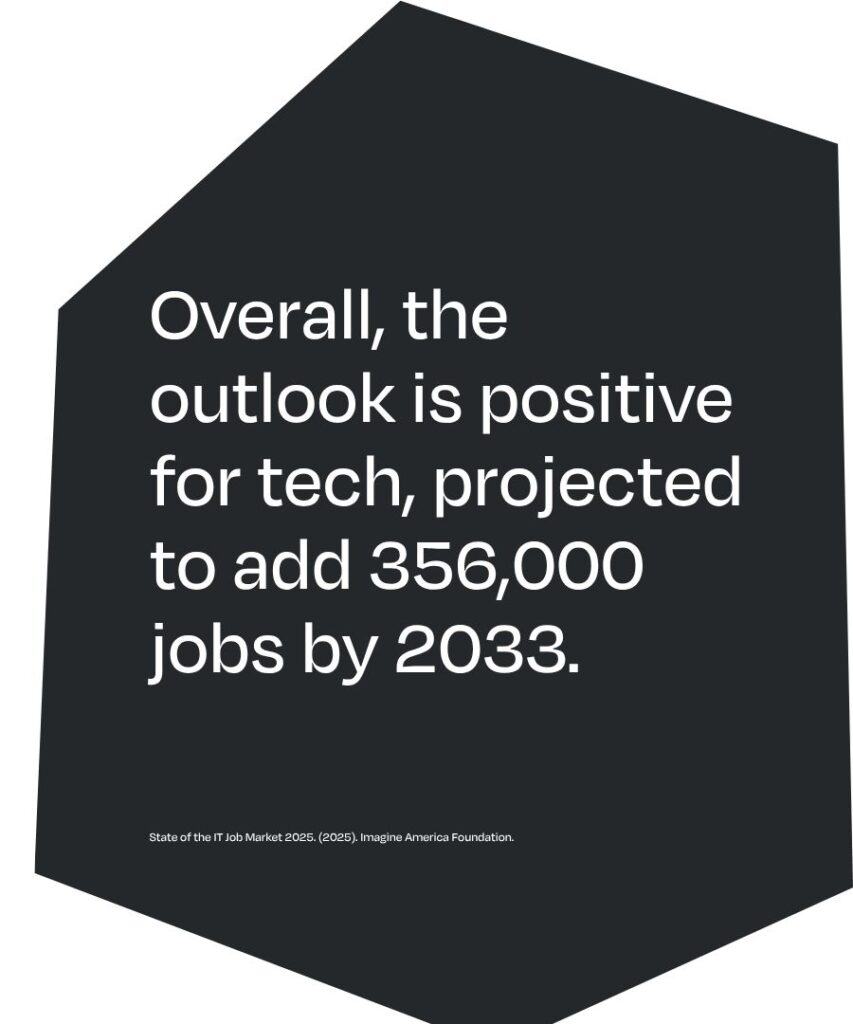
Overall, the outlook is positive for tech jobs in 2026 and beyond. These roles are projected to grow much faster than the average for all occupations, adding over 356,000 jobs by 2033.4
Summary
Tech hiring in 2026 is marked by modest overall growth but intense competition for cloud, data, AI/ML, and cybersecurity talent, especially in markets like Houston and Chicago. Employers are shifting to skills-based hiring, with salaries projected to rise 8-10% and acute shortages pushing premiums for specialized roles. Companies that streamline hiring and invest in upskilling will secure scarce talent, while candidates who deepen expertise in cloud, cybersecurity, and AI are best positioned. The long-term outlook is strong, with tech roles projected to add 356,000 jobs by 2033.
Cyber and data experts in short supply
There is a significant shortage of skilled candidates to fill cybersecurity, data analytics, and AI-integration roles. With businesses facing a surge of cyberattacks and cyber theft resulting in over $16.6 billion of lost revenue, it’s more vital than ever to recruit experienced professionals with the competencies needed to protect data, systems, and infrastructure.5
In fact, data engineers, architects, and infrastructure manager candidates with the skills to manage data integrity, security, and accessibility now top hiring managers’ lists. AI and machine learning roles, such as AI engineers who can develop and implement AI models and algorithms, also continue to grow across many industries. Top industries include healthcare, software as a service (SaaS), manufacturing, supply chain, logistics, energy, and finance.
“Companies are increasingly using automation to help drive the hiring process. In addition, they are prioritizing demonstrable skills and adaptability over traditional experience. There is a high-stakes race for elite talent, and companies are being aggressive to acquire it.”
Ed Meindl, Senior Vice President, IT & Digital Marketing at Addison Group
Skills-based hiring gains traction
Tech salaries are projected to rise by 8-10% in 2026,6 although this is a slower pace than in recent years. There’s also a major shift toward skills-based hiring, with employers noting that experience alone no longer guarantees higher pay.7
In-demand data and AI-based jobs will continue to command the highest compensation levels, with employers often exceeding initial salary expectations to secure top talent. Cyber talent shortages are driving up salaries by 10–15% for mid-level roles, such as cybersecurity analysts and engineers with seven to nine years of experience. Highly specialized positions like cloud security architects and DevSecOps engineers garner even more compensation due to their niche expertise.8
“Companies are still adding a lot of extra steps to interviewing, which can significantly slow the process, leading employees to miss out on a great candidate.”
Mike Weast, President, IT & Digital Marketing at Addison Group.
Sealing the talent deal
Tech candidates and employers often find themselves in a hiring standoff due to both parties’ heightened expectations. Companies need to understand that with tech unemployment hitting a historic low of 2.8% in 20259, they are competing for a limited pool of the most skilled talent. To secure top talent, employers need to be careful about unnecessarily stretching out the interview process or they risk losing a great employee.
Many candidates are holding out for a ‘career-changing opportunity’ before making a move, but sign-on bonuses and upskilling will help seal the deal. While remote work is less likely to be touted as a ‘perk’ since many jobs are now hybrid or back-in-office, businesses can focus on showcasing a positive culture and work-life balance, which is still a top priority for candidates.
Employers who act decisively, prioritize skills, and invest in development will secure the best talent. For candidates, sharpening expertise in cloud, cybersecurity, and AI is no longer optional — it’s the surest path to long-term success.
In-demand roles
- Cloud Engineer/Architects
- Cybersecurity Engineer
- Data Engineer
- Product Manager
- Infrastructure Managers
Highest-paid Information Technology salaries
| Title | National averages |
| Chief Technology Officer (CTO) | $266,122 |
| VP of IT | $263,500 |
| Chief Information Officer (CIO) | $262,407 |
| VP of Development | $262,243 |
| Chief Information Security Officer | $257,181 |
| Cloud Architect | $206,008 |
| Artificial Intelligence (AI) Engineer | $204,778 |
| Machine Learning Engineer | $195,724 |
| Network Architect | $192,346 |
| Senior Business Intelligence Director | $188,486 |
Q&A
Question: How is the IT job market shifting in 2026?
Short answer: Growth is modest as many companies pause big tech initiatives amid economic uncertainty and AI-driven automation trims some lower-level roles. Even so, competition for skilled talent remains intense. There’s a clear shift away from traditional software engineering, now only about 10% of in-demand roles, toward cloud engineering, data analytics, AI, and machine learning. The long-term outlook is strong, with tech roles projected to grow much faster than average and add over 356,000 jobs by 2033.
Question: Which roles and skills are most in demand, and why?
Short answer: Employers are prioritizing cloud, cybersecurity, data, and AI/ML capabilities. In-demand roles include Cloud Engineers/Architects, Cybersecurity Engineers, Data Engineers, Product Managers, and Infrastructure Managers. Data engineers, architects, and infrastructure managers who can ensure data integrity, security, and accessibility top hiring lists. AI Engineers and ML Engineers are also growing across industries such as healthcare, SaaS, manufacturing, supply chain, logistics, energy, and finance. A surge in cyberattacks, driving $16.6B in losses, underscores the urgent need for experienced cyber and data talent.
Question: Where are the strongest geographic markets right now?
Short answer: Houston and Chicago remain major tech markets with ample open roles. In contrast, both coasts have softened in terms of openings.
Question: How are salaries and hiring practices evolving, and what should employers do to secure talent?
Short answer: Salaries are projected to rise 8–10% in 2026, with cyber talent in especially short supply commanding 10–15% premiums for mid-level roles; highly specialized positions (e.g., cloud security architects, DevSecOps engineers) garner even more. Hiring is shifting to a skills-based approach, where demonstrable capabilities and adaptability matter more than tenure alone. With tech unemployment at a historic low, employers should streamline interviews, move decisively, and consider sign-on bonuses and upskilling. Culture and work-life balance remain key differentiators, while remote work is less of a standout perk as many roles move to hybrid or in-office.
Question: Which IT titles command the highest national average pay?
Short answer: According to the guide’s national averages, some of the highest-paid roles are:
- Chief Technology Officer (CTO): $266,122
- VP of IT: $263,500
- Chief Information Officer (CIO): $262,407
- VP of Development: $262,243
- Chief Information Security Officer (CISO): $257,181
- Cloud Architect: $206,008
- Artificial Intelligence (AI) Engineer: $204,778
- Machine Learning Engineer: $195,724
- Network Architect: $192,346
- Senior Business Intelligence Director: $188,486
These figures align with the broader trend: premium pay for cloud, data, AI/ML, and cybersecurity expertise.
For more valuable insights and national averages of salaries across hundreds of roles in administrative, digital marketing, finance, accounting, healthcare, human resources, and information technology, download your free copy today.
- https://www.staffingindustry.com/news/global-daily-news/it-employment-reflects-market-in-holding-pattern
- https://www.hiringlab.org/2025/07/30/the-us-tech-hiring-freeze-continues/#:~:text=As%20of%20early%202025%2C%20postings,are%20AI%2Drelated%20tech%20jobs
- Ed Meindl, senior vice president, information technology practice at Addison Group
- https://imagine-america.org/state-of-it-job-market-2025
- https://industrialcyber.co/reports/fbis-internet-crime-report-2024-records-16-6-billion-in-cybercrime-losses-amid-rising-ransomware threats/#:~:text=The%20Federal%20Bureau%20of%20Investigation,the%20Internet%20Crime%20Report%202024.
- https://www.linkedin.com/pulse/ultimate-guide-tech-salaries-2025-dwaine-rob-roberts-nrjqc/
- https://www.scworld.com/news/cybersecurity-salaries-in-2025-shifting-priorities-rising-demand-for-specialized-roles
- https://research.com/careers/average-cyber-security-salary-by-state#:~:text=Junior%20professional%20salary:%20A%20junior,and%20handle%20high%2Dstakes%20decisions.